Commentary: Shorts and slippers aren’t sloppy – they’re sensible attire for Singapore’s weather
SINGAPORE: Singapore's flash floods made the news in one case once again.
According to PUB, on Apr 17, flooding occurred on pedestrian sidewalks along Dunearn Road and the park connector along Ulu Pandan Canal, due to high h2o levels in next drains.
Photos and video clips of inundated roads and tennis courts demonstrate the disruptive effects of heavy rains, which have been par for the course. The Singapore Meteorological Service previously forecasted thundery showers in the afternoon and early evenings within the first half of April.
After the heavy rains of Apr 17, Minister for Sustainability and the Environs Grace Fu said "recent floodings have shown the furnishings of climate change in Singapore", which is why mitigating climate change and adapting to its furnishings is necessary.
PUB has already spent Due south$ii billion on improving Singapore'south drainage system over the last decade, and volition spend a further Due south$ane.4 billion on overflowing mitigation measures over the next 5 years.
READ: Commentary: Why that unusually loftier rainfall in Singapore during the final summer monsoon may be our new normal
READ: Commentary: The earth is hungry for green cooling solutions. Thankfully, Singapore is pioneering them
Mitigation and adaptation to climate change sometimes come into conflict. For example, building seawalls confronting rising sea levels would destroy mangroves, seagrass meadows, and coral reefs, which tin sequester much more carbon than terrestrial forests.
In Singapore, data shows how our mangrove encompass has declined by 90 per cent since the 50s equally these fabricated way for major developments, particularly when land was reclaimed.
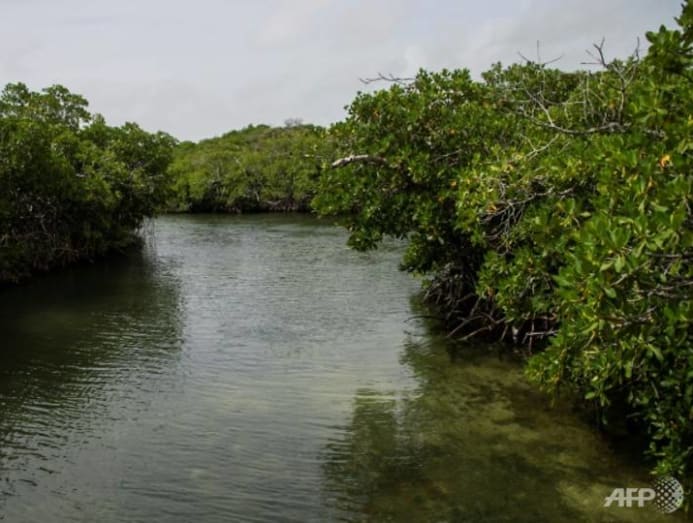
In 1953, information technology was estimated it had 63.4 sq km of mangroves. In 2018, the state'southward mangrove area was estimated to exist 8.one sq km, said Associate Professor Daniel Friess from the National University of Singapore in a by interview.
He has studied mangroves in Singapore for more than a decade.
Amid top-downwards directives of improving water infrastructure and finding means to accommodate, we tin can also think of doing something simple yet of huge personal importance in adapting to climatic change: Our dress lawmaking and how nosotros cool our buildings.
READ: How Singapore's mangroves tin can contribute in the boxing against climatic change
RETHINKING HOW We Wearing apparel
We demand to rethink how we keep cool, and how cold our indoor temperatures are.
Offset, to consider a dress lawmaking suited for our tropical weather, and second, to reconsider air conditioning every bit the primary mode of cooling in buildings.
Let's talk about how nosotros apparel in sunny Singapore.
Long-sleeved shirts, pants, shoes, suits and heels are mainstays in the CBD, plumbing equipment the narrative of Singapore as a serious and slick financial centre of the globe.
This fragile narrative, however, is challenged when a roaring thunderstorm or an unbearable heat wave happens, revealing disgruntled office workers who have gotten soaked in a sudden downpour during their lunch break. Or soaked from sweat just heading to and from a meeting.
READ: Commentary: Air-workout – the unspoken energy guzzler in Singapore
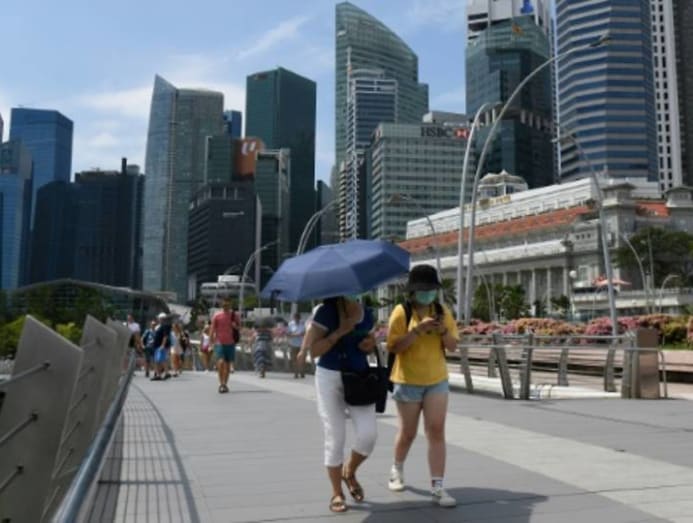
I tin can't relate, as I get virtually about everywhere in slippers and shorts. My renown for that is second only to my reputation as an ecology advocate.
What's incorrect with dressing down when no disrespect is meant? Information technology'south interesting that I go several emails from event organisers explicitly stating their dress lawmaking, to foreclose me from sticking out similar a sore thumb.
Most people complain about Singapore's erratic weather condition - it'due south hot and humid, or storming and moisture - but no 1 ever seems to complain about the dress code that amplifies discomfort in Singapore's weather.
Just wearing something every bit comfortable every bit sandals or slippers, is the virtually sensible affair for our increasingly volatile weather.
READ: Commentary: Reducing household h2o consumption starts with the toilet bowl
There would be concerns about looking presentable, especially to foreign counterparts, but I would argue that the definition of "presentable" would change if our dress codes change, and there is nothing presentable about shirts soaked in sweat or pants wet by pelting.
In fact, there is precedent for this. The Singapore Police Force is i of the institutions to recognise that it makes sense to wear shorts in Singapore, with bermudas existence fabricated a office of the uniform for Police force Coast Guard officers on Pulau Ubin in 2005, and Customs Policing Officers at present wearing shorts while on patrol around Singapore's neighbourhoods.
If our dress lawmaking changes, buildings can finally be redesigned to reduce heat proceeds and cooled with only mechanical and natural ventilation.
Working from home has also made athleisure, the mainstay of Big Tech staff around the globe, mainstream part wear. Do we really desire to surrender personal comfort and sensible dressing, which aids productivity and more?
(Mind to James Trevelyan, engineer and founder of a personal air-conditioner company talk virtually how to keep the planet cool without harming it.)
TOO MUCH AIR-CON?
Another problem nosotros take is how cold our buildings are. I find myself being blasted with air-con more often than I like: In public send, at my university, at my office, in shopping malls, even at sustainability events. We must be the only tropical country where people wear cardigans all day.
Air-con came to Singapore in the 1950s, the first air-conditioned shopping mall opened in 1973, and well-nigh all shopping malls have been air-conditioned ever since.
Founding Prime Minister Lee Kuan Yew famously said that air-conditioning was the unmarried about of import invention of the 20th century, crediting it with making development in the tropics possible.
Perhaps this is why Singapore'due south buildings are increasingly build around air-con. Most office buildings are besides designed with lots of drinking glass, assuasive calorie-free and heat into the edifice, increasing the cooling load.
READ: Commentary: Nosotros lived fine without air conditioning for a very long fourth dimension
The waste heat from air conditioning units also contribute to the urban heat island effect, making information technology fifty-fifty hotter exterior the edifice and contributing to climatic change.
Air-workout accounts for upwards to 25 per cent of household electricity consumption, and lx per cent of non-residential buildings' electricity consumption. This translates to about 10 per cent of Singapore'due south carbon emissions.
While in that location are electricity-saving initiatives like the Greenmark scheme for buildings and the Minimum Free energy Performance Standards for households, they cannot achieve a drastic reduction in energy needed for cooling, which is crucial for mitigating climatic change, unless made mandatory. Merely even that needs time.

The Regime has declared climatic change to exist a global emergency. I believe this means Singapore needs to reconsider the existing ways of doing things, and be bold plenty to change attitudes in gild to mitigate and adapt to climatic change.
Equally a slipper-wearing environmentalist, I hope that we can change our lifestyles and the way buildings are designed not only to mitigate and adapt to climate alter, simply also to suit Singapore's warm and moisture conditions.
Ho Xiang Tian is the co-founder of informal environmental group LepakInSG.
Source: https://cnalifestyle.channelnewsasia.com/commentary/commentary-shorts-and-slippers-arent-sloppy-theyre-sensible-attire-singapores-weather-299426

Post a Comment for "Commentary: Shorts and slippers aren’t sloppy – they’re sensible attire for Singapore’s weather"